
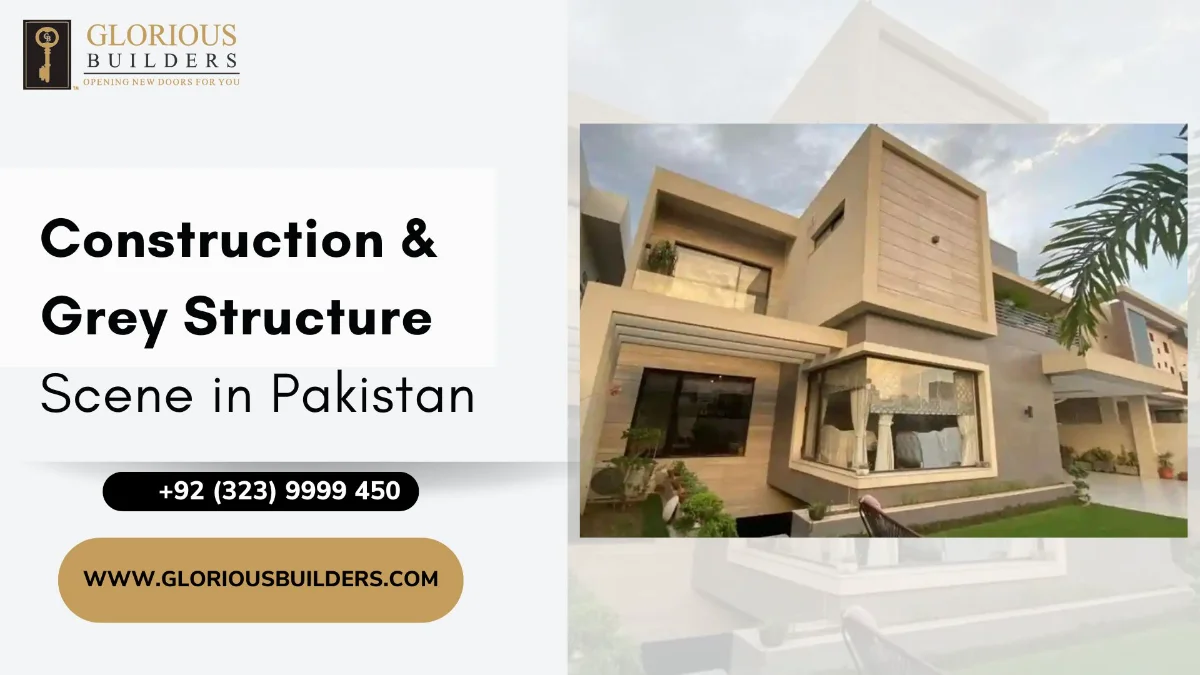
Construction & Grey Structure Scene in Pakistan: Everything You Must Understand Before Building a Home
Building a home in Pakistan is not just about construction it’s a profound life decision that intertwines emotion, finance, and legacy. For many, it represents the culmination of a lifetime of hard work, a dream of security, and a physical anchor for future generations. Yet, beneath this dream lies a reality filled with complexity, hidden challenges, and financial risks that most enter without full knowledge.
The emotional weight of constructing your own space, choosing every brick, every room’s orientation is unparalleled. Financially, it’s often the largest investment an individual or family will ever make. This long-term commitment is why the journey from an empty plot to a finished home is fraught with more than just logistical hurdles; it’s a test of patience, trust, and resilience.
A critical, often overlooked, starting point is the fundamental difference between buying a plot and already owning one. Purchasing land introduces a separate layer of due diligence verifying titles, understanding society bylaws, and assessing soil conditions before a single foundation pit is dug. Conversely, those who already own a plot face a different set of confusions, primarily centered on execution: “Who will build it?” and “How do I even begin?”

Most people embark on construction armed with enthusiasm but lacking crucial knowledge. They rely on word-of-mouth recommendations, vague per-square-foot rates, and a deep-seated trust in the informal contractor system, often leading to regrettable discoveries mid-way through the process. The regret is rarely about the idea of building a home it’s almost always about the stressful, opaque, and financially draining process.
This guide promises clarity before your money is spent. It is designed to cut through the myths and present the ground reality of Pakistan’s construction scene, equipping you with the questions to ask, the risks to anticipate, and the framework needed to turn your dream into a well-built reality without the heartache.

The Real Construction Scene in Pakistan (Ground Reality): What Actually Happens on Construction Sites
The dream of building your own home in Pakistan often collides with a stark, unorganized reality the moment the first bulldozer arrives on site. Unlike regulated markets, Pakistan’s construction industry operates on a largely informal, trust-based ecosystem where written contracts are scarce and verbal promises carry disproportionate weight. This isn’t about large, corporate builders with standardized processes; it’s a world driven by individual contractors and the leaders, each with their own network of laborers and suppliers, where consistency and accountability are rare commodities.
At the heart of this confusion is the contractor-driven system versus the model of organized builders. A typical contractor operates as a middleman and project coordinator. He mobilizes labor, sources materials (often prioritizing cost over certified quality), and manages day-to-day activities, but rarely provides detailed engineering, architectural oversight, or fixed-price, fixed-scope contracts. There is a fundamental misalignment: his profit often depends on minimizing his costs be it through material substitution, labor shortcuts, or scope reduction while your goal is maximum quality and adherence to design. An organized builder or construction firm, conversely, operates on a project management fee or a transparent markup, with systems for quality checks, measured billing, and single-point accountability. Most homeowners only grasp this difference after experiencing the chaos of the former.
This leads directly to the most common pitfall: why the “rate per square foot” quotation is dangerously misleading. A contractor might quote a tempting rate of, say, Rs. 4,500 per sq. ft. for a “grey structure.” What this figure almost never includes are critical items like:
Comprehensive excavation and foundation work for varying soil conditions.
Proper waterproofing for basements and terraces.
Quality branded cement and approved-grade steel.
Electrical conduit and plumbing sleeve installations within the structure.
Staircase finishing or mummty construction.
This vague pricing model is a breeding ground for “variation orders” and continuous requests for additional funds”Sir, yeh to estimate mein tha hi nahi“making the final cost 25-40% higher than the initial attractive quote.
Homeowners enter this arena believing several common myths:
- Myth: “The contractor is a family friend; he won’t cheat us.”
- Reality: Even with good intent, lack of professional systems leads to costly errors and delays.
- Myth: “A lower per sq. ft. rate means I’m saving money.”
- Reality: It often means lower quality, hidden costs, and future repair expenses.
- Myth: “I can manage the construction myself with a mistri and save the contractor’s fee.”
- Reality: Without technical knowledge and full-time supervision, material wastage, rework, and quality compromises will erase any perceived savings.
Ultimately, this gap between expectation and ground reality is why people regret the process, not the idea of building a home. The stress comes from daily site disputes, escalating budgets, the anxiety of being misled, and the exhausting need to constantly verify every detail. The dream of creation becomes a nightmare of crisis management, revealing that in Pakistan’s construction scene, what you don’t know doesn’t just cost you, it haunts you throughout the journey.

Things to Consider Before Buying a Plot: For People Who Haven’t Purchased Land Yet
A building’s true foundation is not its concrete base, but the piece of land on which it stands. For anyone dreaming of a home in Pakistan, the plot is your first and most critical investment. A wrong choice here creates problems no builder can fully fix. This decision requires balancing immediate appeal with long-term wisdom, looking beyond the price tag to factors that dictate livability, legality, and future value.
The classic dilemma is location versus bylaws versus future resale value. A prime location in a popular sector is tempting, but if the housing society’s bylaws are overly restrictive limiting height, coverage, or architectural style, your dream design may never be built. Conversely, a plot with flexible rules in a less developed area might offer more creative freedom but slower appreciation in resale value. The sweet spot is a location with clear development momentum, governed by sensible, transparent bylaws that protect both your construction rights and the community’s long-term aesthetic and value.
Housing society rules are non-negotiable and must be scrutinized before purchase. Key documents to obtain and understand are the Sub-Lease Agreement and the Building Control Regulations. Pay precise attention to:
- Coverage Allowance: The percentage of your plot area on which you can build. A 50% coverage on a 10 Marla plot is very different from 60%.
- Height Restrictions: Limits on number of floors or total height from road level.
- Basement Permissions: Whether basements are allowed, and if they are counted in covered area or FAR (Floor Area Ratio).
- Setback Requirements: Mandatory open spaces on the front, back, and sides of the structure.
- Architectural Approval Process: The complexity, timeline, and potential costs of getting your design approved.
Two of the most physically critical yet often ignored factors are soil condition and plot orientation. Soil testing (through a simple bore test) determines the type and depth of foundation required. A plot with loose, filled, or water-logged soil can increase foundation costs by millions. Orientation the direction your plot faces directly impacts natural light, ventilation, and heat gain. A north-facing plot in Punjab, for instance, offers better natural light management than a west-facing one, which bears the brunt of the afternoon sun, increasing future cooling costs.
Assessing utilities, access roads, and long-term livability is essential. Verify the actual availability and connection charges for:
Electricity (load availability and feeder reliability)
Sui Gas (main line proximity)
Water (society supply vs. necessity of borewell)
Sewerage (connected line or septic tank requirement)
Internet & Cable (service providers in the area)
Visit the plot after heavy rain to check for drainage issues or water pooling. Evaluate the width and construction quality of the access road will it accommodate construction trucks and daily family vehicles?
For overseas buyers, the risks are multiplied. Physical absence makes it difficult to verify promises on the ground. Relying solely on video calls or relatives can lead to misinformation. Key additional risks include:
- Title Frauds: Ensuring a clear, marketable title through a verified lawyer is paramount.
- Promise vs. Reality: Development timelines for roads, parks, and utilities in new societies are often delayed.
- Power of Attorney (POA) Complexities: Granting POA for purchase requires immense trust and legal precision to prevent misuse.
- Resale Complications: Without physical presence, managing resale in the future can become disproportionately difficult.
Remember, the plot is the canvas. Its flaws become the building’s inherent flaws. Investing time in this due diligence is the first, and most powerful, step in building a home that is secure, serene, and sound.

“I Already Have a Plot – Now I Want to Build a House”: Where Real Confusion Begins
Congratulations the land is yours. The deed is signed, the boundary walls are up, and the dream feels tangibly close. Yet, for most homeowners in Pakistan, this moment of possession is swiftly followed by a wave of daunting questions. The abstract idea of “building a house” now demands concrete decisions, and this is where real confusion begins. The path forward splits, and the choice you make here will define your entire construction experience, budget, and sanity.
The first and most fundamental fork in the road is the decision between self-managing the construction versus hiring a professional builder or contractor.
Self-Managing (The “I’ll Handle It” Approach):
This route involves you, the homeowner, acting as the general contractor. You will:
- Hire individual mistris (masons, electricians, plumbers) for each trade.
- Personally source and purchase all materials from cement and bricks to sanitary ware and tiles.
- Handle daily site supervision, labor management, and problem-solving.
- Coordinate between any hired architect/engineer and the on-ground workforce.
Perceived Benefit: Maximum control and potential cost savings by eliminating a builder’s profit margin.
Hidden Reality: It requires immense time, technical knowledge, and a relentless physical presence. The risk of cost overruns from material wastage, rework due to coordination errors, and quality inconsistencies is extremely high. The “savings” are often lost to inefficiency, delays, and the emotional toll of managing a complex project without systems.
Hiring a Builder/Contractor (The “Handover the Headache” Approach):
This means engaging a single entity responsible for delivering the structure.
Critical Sub-Choice: Grey Structure Only vs. Complete Turnkey Construction
This is the second major point of confusion. Most contractors offer these as distinct packages:
| Grey Structure Only | Complete Turnkey Construction | |
| Scope | The bare skeletal structure: foundation, columns, beams, slab, brickwork, roof. “Shell” of the house. | Everything from foundation to final touch: structure, all finishes (electrical, plumbing, tiling, painting, kitchens, bathrooms), fittings, and sometimes landscaping. |
| Your Role | After grey structure, you must separately hire teams for electrical, plumbing, flooring, etc., leading to another round of coordination headaches. | You provide design choices; the builder executes and delivers a home ready to move into. |
| Budget Clarity | Seemingly lower upfront cost, but the total cost of finishing is unknown and often shocks homeowners. | Higher upfront cost, but it is a more complete and predictable budget for the entire project. |
This leads directly to the pivotal issue of budget planning: visible costs vs. hidden costs. The initial estimate, whether for grey structure or turnkey, is almost never the final amount.
- Visible Costs: Cement bags, steel bars, bricks, labor wages, the items quoted.
- Hidden Costs: Site preparation, waste removal, soil testing, tool and equipment rentals, water for curing, security, utility connections, design changes, rising material prices, and the inevitable “variations” for work “not in the original scope.”
Finally, managing timeline expectations versus on-ground reality in Pakistan is crucial. A contractor might promise a 6-month grey structure. The reality often stretches to 9-12 months due to:
- Weather delays (rain, extreme heat).
- Labor unavailability during harvest seasons or Eid.
- Delays in material delivery.
- Rework due to errors.
- Slowed progress due to sporadic cash flow.
For the homeowner, this phase is about aligning expectations. The plot is passive land; transforming it into a home is an active, complex project. The confusion stems from underestimating this complexity. The key is to choose a management path (self or builder) and a scope (grey or turnkey) that aligns not with an idealized vision, but with your actual capacity for involvement, risk tolerance, and understanding of the turbulent process ahead.

Grey Structure Explained: Grey Structure Is More Than Cement and Steel
The term “grey structure” evokes an image of a bare concrete skeletona simple, straightforward phase of construction. In reality, it is the most technically critical, irreversible stage of building your home. Every decision, every material, and every workmanship detail in this phase determines the structural integrity, longevity, and future livability of your house. Mistakes made here are buried in concrete and brick, becoming prohibitively expensive or even impossible to fix later.

Here is what truly comprises the grey structure, layer by layer:
Excavation and Foundation Work
This is where the house meets the earth. It begins with digging to the specified depth, but the critical step is the soil bearing capacity test. Based on this, the structural engineer designs the foundation whether it’s simple spread footings, reinforced continuous footings, or, for weak soil, a more expensive raft foundation. Poor soil analysis leads to differential settlement, resulting in dangerous cracks throughout the building’s life.RCC Structure (Columns, Beams, Slabs)
This is the reinforced concrete skeleton. Precision is non-negotiable.
- Columns: Vertical members transferring load to the foundation. Their placement, size, and steel reinforcement (rebar) as per structural drawings are vital.
- Beams: Horizontal members connecting columns, supporting slabs. Incorrect beam depth or reinforcement leads to deflection (sagging).
- Slabs: The floors and roof. Key concerns include slab thickness, concrete grade (commonly C-20 or C-25), and proper curing to prevent future cracks and leaks.
- Brickwork and Block Masonry
The infill walls between columns. This is not just stacking bricks. It involves:
Using first-class, properly soaked bricks.
Maintaining perfect plumb (vertical alignment) and level.
Ensuring strong, full mortar joints.
Leaving designated spaces (sleeves) for electrical conduits and plumbing pipes.
Roof Insulation Basics
A flat RCC roof in Pakistan’s heat acts as a giant heat absorber. During the grey structure, terracotta or polyurethane insulation tiles should be laid on the slab before the final waterproofing and screed topping. This simple step, often skipped to save cost, drastically reduces indoor temperatures and future air conditioning bills.Staircase and Mumty Construction
The staircase is a complex structural element built into the grey structure. Its design must balance safety, comfort, and space efficiency. The mumty (roof over the staircase) is also constructed at this stage and must be properly integrated with the roof’s waterproofing system to prevent leaks.Plumbing and Electrical Sleeves (The Most Commonly Ignored Step)
This is where most contractors fail homeowners. Before casting slabs and building walls, PVC sleeves (pipes) for all future plumbing and electrical conduits must be accurately embedded within the RCC and brickwork. This includes sleeves for:
Main water supply and sewerage lines.
Toilet and bathroom soil pipes.
Electrical conduits from the distribution board to outlet points.
If forgotten, laborers will later use hammer drills to chase walls and break through the slab to run pipes and wires, severely compromising structural strength and waterproofing, and creating a mess.

Why mistakes in the grey structure become permanent problems later:
- Under-designed Foundation: Leads to cracks in walls, uneven floors, and doors/windows that won’t close properly.
- Poor Concrete Quality: Results in spalling (concrete flaking), exposed rusting rebar, and reduced building lifespan.
- Incorrect Brickwork: Causes plaster cracks, poor sound insulation, and weak walls for mounting fixtures.
- Neglected Insulation & Sleeves: Leads to unbearable heat, exorbitant electricity bills, and costly, destructive hacking for utilities post-construction.
The grey structure is not a rough, temporary phase. It is the permanent, load-bearing core of your home. Investing in quality, supervision, and precision here is not an expense; it is the most important insurance policy for the decades you will live under that roof.

Common Grey Structure Pain Points in Pakistan: Problems Homeowners Face but Rarely Expect
The grey structure phase is where trust is most abused and where homeowners, due to a lack of technical knowledge, are most vulnerable. While they worry about the aesthetics of finishes, critical compromises are being made inside the walls and slabs compromises that surface months or years later as costly, disruptive repairs. These are not mere inconveniences; they are systemic failures of the informal construction process.
- Steel Quantity Manipulation
The structural drawings specify the diameter, number, and spacing of steel bars (rebar). A common malpractice is reducing the steel quantity using fewer bars, smaller diameters, or increasing spacing and pocketing the difference in cost. For example, using 4 bars in a column instead of 6, or #4 bars instead of #5. This directly weakens the structure’s ability to withstand seismic loads or settlement, risking catastrophic failure in extreme events. - Low-Quality Concrete or Improper Mixing
Concrete’s strength (measured as Grade, e.g., C-20, C-25) depends on the precise ratio of cement, sand, aggregate, and water. On-site, to save material, laborers often:
Add excess water to make concrete easier to pour, which severely weakens its final strength.
Use a lower cement ratio or mix in unclean, salty sand.
Use poor-quality or uncertified cement from unknown brands.
The result? A slab that may develop cracks prematurely, dusting surfaces, and reduced structural life.
- Poor Curing Practices
Concrete gains strength through a chemical reaction that requires moisture for at least 7-14 days after pouring. This process is called curing. In Pakistan, it is standard to see newly poured slabs left to dry in the scorching sun. Without proper, continuous water curing, the concrete develops micro-cracks, never achieving its designed strength. This is a silent flaw that homeowners never see until hairline cracks spread across their ceilings. - Basement Waterproofing Negligence
For homes with basements, this is a critical, irreversible step. Proper waterproofing involves applying a membrane (bituminous or polymer-based) to the external walls of the basement before backfilling. To save cost and time, contractors often:
- Skip it entirely.
Apply a thin, single coat that tears during backfilling.
Apply waterproofing on the inside, which is ineffective against hydrostatic pressure.
The consequence is chronic dampness, seepage, musty smells, and a basement that becomes unusable a problem almost impossible to fix post-construction.
- Measurement Fraud
This is a direct financial deceit. When billing for work, contractors often inflate measurements:
Overstating the volume of concrete poured.
Inflating the square footage of brickwork.
Charging for full-depth excavation when the site wasn’t fully dug.
Without a third-party or the homeowner physically verifying each measurement with a measuring tape, the bill can be inflated by 15-25%.
- The “We’ll Fix It Later” Mindset
This is the most dangerous phrase in Pakistani construction. When a mistake is spotted a column out of line, a sleeve forgotten, poor concrete visible the standard reassurance is, “Baad mein theek kar denge.” In reality, structural mistakes cannot be “fixed later” with plaster or paint. “Fixing” usually means cosmetic concealment, burying a structural flaw that will manifest later as a crack, leak, or alignment issue. This mindset prioritizes speed over permanence, leaving the homeowner with a beautifully finished home built on compromised fundamentals.
These pain points thrive in an environment of low transparency and absent supervision. They represent the gap between what is promised and what is delivered a gap filled not just with substandard material, but with risk that becomes a permanent part of your home’s DNA. The grey structure’s true cost is not just in rupees spent, but in the peace of mind lost when you can’t trust what’s inside your walls.

The Complete Home Construction Journey: Step-by-Step Reality from Start to Finish
The journey from an empty plot to a furnished home is often visualized as a linear, straightforward progression. The reality, as experienced by countless homeowners in Pakistan, is a cyclical process of planning, chaos, rework, and surprise. Understanding this true, end-to-end journeywith its predictable pressure pointsis the only way to mentally and financially prepare for what building a home actually entails.
- Architectural Design and Working Drawings
This stage begins with hope and creativity. You engage an architect for conceptual designs and 3D views that capture your dream. The critical pitfall here is the gap between conceptual drawings and detailed working drawings.
- Concept Drawings: Show aesthetics, room layouts, and elevations.
- Working Drawings: Include every technical detail: structural plans, electrical layouts, plumbing schematics, cross-sections, and specifications for materials.
The Reality: Many homeowners proceed with only conceptual drawings, leading to massive confusion and ad-hoc decisions during construction. Without coordinated working drawings, the electrician and plumber will clash inside walls, and the structure may not support desired finishes.
- Approval Process and Compliance Issues
Before any digging begins, your design must be approved by the relevant authority (e.g., LDA, CDA, or the housing society’s building control).
- Expected: Submission of drawings, payment of fees, receipt of permit.
- On-Ground Reality: The process is often bureaucratic and slow. Unclear bylaws or a design that inadvertently violates setback or coverage rules can lead to rejections, requests for revisions, or demands for “unofficial” fees. This stage can cause delays of weeks or even months before a single brick is laid.
- Grey Structure Execution Challenges
As detailed in prior sections, this is the phase of greatest technical and fiduciary risk. Even with good drawings, the execution challenges are immense:
- Constant supervision is needed to prevent material theft and quality compromises.
- Weather disruptions (rain, heat) halt work.
- Coordination between steel fixers, carpenters (for formwork), and concrete suppliers must be flawless for each pour. Any misstep where wrong concrete grade, poorly tied steel is buried permanently.
- Finishing Phase Chaos
Once the grey structure is complete, the project transforms from one major contractor to a swarm of specialized trades: electricians, plumbers, plasterers, tilers, carpenters, painters, and more. This is where coordination reaches its peak complexity.
- The Domino Effect: If the plumbing lines are laid before electrical conduits, the electrician will have to break through newly laid pipes.
- Material Logistics: Tiles, sanitary ware, fixtures, and wood for cabinets must arrive on time and be stored securely. Delays in any one material hold up multiple trades.
- Quality Variance: The skill level between a master tiler and a helper is vast, directly impacting the final look. Without strict supervision, the finish quality becomes inconsistent from room to room.
- Final Handover Surprises
The moment you’ve waited for should be celebratory. Instead, it often brings a final list of frustrations the punch list.
- Common Surprises: Incomplete paint touch-ups, faulty electrical switches, leaking faucets, misaligned door handles, grout stains on tiles, and incomplete cleaning.
- Missing Documentation: You may not receive the as-built drawings (updated drawings reflecting any changes made during construction), material warranties, or operation manuals for installed systems.
- The “Final Bill” Surprise: Pending payments for “variations” or “extra work” are presented, often with disputed amounts.
The entire journey is less a straight line and more a series of overlapping, sometimes chaotic, phases. Each stage depends on the precision of the previous one, and a flaw at any point ripples forward, amplifying costs and delays. Recognizing that this process is inherently messy but can be managed with rigorous systems, clear contracts, and professional oversight is the first step in surviving it with your dream, and your sanity, intact.

Construction Budget Reality: What You Are Told vs. What Actually Happens
If there is one universal truth in Pakistani home construction, it is this: The final cost will be significantly higher than the first estimate. This is not necessarily due to malice, but often due to a systemic lack of detailed planning, transparent pricing, and contingency management. Understanding the gap between the presented budget and the on-ground financial reality is crucial to avoiding the severe stress and cash-flow crises that plague most building projects.
- Initial Estimates and Psychological Pricing
The process often begins with an enticingly low number. A contractor or builder, eager to secure the project, provides a rough estimate or a per-square-foot rate. This figure is usually:
- Based on incomplete or conceptual designs.
- Calculated for basic specifications, excluding many essential items.
- A form of “psychological pricing” designed to win your agreement, with the knowledge that costs will be negotiated upwards later.
- Variation Costs During Construction
This is the primary engine of budget overruns. Variations are changes or additions to the original scope. In the informal construction model, the original “scope” is so loosely defined that almost everything becomes a variation.
- “Sir, is mein toh nahi tha” (This wasn’t included): You hear this for critical items like proper excavation, quality waterproofing, electrical conduits in slabs, or even the staircase railings in the grey structure.
- Design Changes: Deciding to move a bathroom wall or add an extra window after work has begun generates demolition and rework costs that are 2-3 times higher than if planned initially.
- Unforeseen Site Conditions: Discovering poor soil requiring deeper foundations, or hitting rock during excavation, leads to immediate, unbudgeted expenses.
- Finishing-Stage Budget Shocks
The grey structure budget is only 50-60% of the total cost. The finishing stage (electrical, plumbing, tiling, kitchen, bathrooms, painting) is where homeowners experience the most severe financial shock.
- The choices for finishes have an enormous price range (e.g., tiles from Rs. 100/sq. ft. to Rs. 2,000/sq. ft.).
- Hidden costs emerge: under-floor plumbing, electrical fittings, high-quality sanitary ware, modular kitchen carpentry, and false ceiling work are often grossly underestimated in initial plans.
- The cumulative cost of small itemslight fixtures, taps, door handles, switchescan easily run into millions.
- Cashflow Pressure and Material Price Fluctuations
Construction is a cash-intensive process. Payments are typically demanded at milestones (completion of foundation, slab, etc.). The financial pressure is relentless.
- Material Price Volatility: The prices of steel, cement, and tiles are subject to market fluctuations. A project delayed by a few months can see a 10-15% increase in these core material costs.
- Sequential Dependency: You cannot pause construction after the slab is cast; you must keep paying for the next step to protect the work already done. This creates a financial treadmill that is hard to step off.
- Overseas Remittance Timing Issues
For overseas Pakistanis, budget management is compounded by currency conversion and remittance delays.
- A builder’s demand for immediate payment to purchase materials clashes with the 2-3 day bank transfer cycle.
- Fluctuations in the PKR exchange rate can erode your foreign currency savings, making the project more expensive than calculated.
- The inability to make immediate, on-the-spot payments for variations can sometimes lead to work stoppages or strained relationships with the contractor.
The Core Issue: The budget overrun is not just about money; it’s about trust and predictability. The constant need for more funds creates a feeling of being out of control and being taken advantage of. The solution lies in moving from a vague estimate to a fixed-scope, measured Bill of Quantities (BOQ) before work begins. This document itemizes every single task, material, and quantity, providing a transparent and accountable financial blueprint. While even a BOQ can have legitimate variations for unforeseen conditions, it eliminates the vast majority of financial surprises that stem from poor planning and opaque pricing. In Pakistani construction, a detailed contract and BOQ are not just paperwork; they are your primary financial defense.

Construction Timelines & Delays: “Just Two More Months” – The Most Common Phrase
In the lexicon of Pakistani construction, no phrase is more repeated or more bitterly received than the contractor’s reassuring, “Bas do mahine aur” (Just two more months). What begins as an exciting project with a promised completion date slowly transforms into an open-ended ordeal. These delays are not anomalies; they are the predictable outcome of an informal system plagued by poor planning, resource mismanagement, and a fundamental lack of process discipline.
Why Construction Delays Are So Common
The root cause is the absence of professional project management. Unlike formal projects with Gantt charts, critical path analysis, and resource scheduling, most home construction operates on a best-effort, day-by-day basis. There is no detailed master schedule tying design, approvals, material procurement, and labor tasks together. When one element slips, the entire chain unravels with no recovery plan, making the initial timeline a hopeful guess rather than a committed deadline.- Weather and Seasonal Impact
Pakistan’s climate imposes non-negotiable delays. Extreme weather events directly halt work:
- Summer Heat: High temperatures make it unsafe for laborers to work during peak afternoon hours, reducing daily productivity. Freshly poured concrete also requires extra care to prevent rapid drying and cracking.
- Monsoon Rains: Work can stop for days during heavy rains. Excavation sites flood, making them unusable, and wet conditions prevent brickwork, plastering, and painting.
- Winter Fog & Cold: In regions like Punjab, dense winter fog shortens work hours, and low temperatures can affect the curing of concrete and plaster if not managed properly.
Labor Availability and Skill Gaps
The construction labor force is largely migratory and informal. Their availability is volatile and disrupts schedules:
- Harvest Seasons: A significant portion of laborers return to their villages during sowing (Kharif) and harvesting (Rabi) seasons, causing sudden site shortages.
- Eid and Festivals: Extended holidays around Eid-ul-Fitr and Eid-ul-Adha can mean a complete site shutdown for 2-3 weeks.
- Skill Mismatch: Even when laborers are present, the specific skilled mason, steel fixer, or carpenter needed for a task might be unavailable, causing bottlenecks.
- Rework Due to Poor Planning
This is perhaps the most frustrating and preventable cause of delay. Reworkhaving to tear down and rebuild work that was done incorrectly consumes massive amounts of time and money. Common examples include:
- Demolishing and rebuilding a wrongly placed bathroom wall because plumbing sleeves weren’t coordinated.
- Chasing walls to add electrical conduits that were forgotten during the grey structure.
- Re-plastering walls that cracked due to poor curing or substandard material.
Each instance of rework not only adds days or weeks but also demoralizes the workforce and the owner.
- Emotional and Financial Cost of Delays
The impact of delays extends far beyond the calendar. It imposes a heavy, often overlooked, toll:
- Financial Burden: If you are renting while building, you pay double accommodation costs plus construction installments for every month of delay. Bank financing costs also accumulate.
- Mental and Emotional Stress: The constant uncertainty, broken promises, and need for follow-up create significant anxiety and strain family peace.
- Opportunity Cost: The time and mental energy consumed in managing delays could have been invested in family, business, or personal well-being.
- Relationship Strain: Disputes over delays often sour relationships with the contractor, architect, and even within the family as pressure mounts.
Ultimately, delays are the symptom of a process without control. A realistic timeline isn’t just about adding extra months to an estimate; it’s about having a managed schedule with accountability, buffer periods for known risks (weather, labor), and a single point of responsibility to proactively solve problems before they stop the clock. Accepting that delays are “normal” is the first step to losing control. The alternative is demanding a system where time is as valued as the bricks and mortar.

The Most Important Question: Why Choosing the Right Builder Is Critical
After navigating the maze of plots, designs, budgets, and timelines, the entire success of your home construction project converges on a single decision: who will build it? This choice transcends mere cost or reputation. In Pakistan’s high-risk construction environment, the right builder is not just a service provider; they are your primary risk manager. They stand between you and the chaotic, informal system that consumes time, money, and peace of mind. Understanding this role is the difference between a dream realized and a nightmare endured.
A builder does more than construct – they manage risk. A professional builder’s value lies in their systems, which are designed to mitigate the very pain points outlined in this guide. They manage:
- Financial Risk: Through transparent, fixed-scope BOQs that prevent surprise variation costs.
- Quality Risk: Through material procurement standards, certified engineering supervision, and defined quality checks.
- Timeline Risk: Through resource-loaded project schedules and proactive problem-solving.
- Compliance Risk: Through in-depth knowledge of bylaws and handling the approval process.
An informal contractor, in contrast, often transfers all these risks directly onto you, the homeowner.
The importance of process, documentation, and accountability cannot be overstated. This is the core differentiator.
- Process: A defined sequence of activities from soil testing and drawing approval to structured milestone payments replaces ad-hoc, reactive work.
- Documentation: Written contracts, approved drawings, material test reports, and minutes of coordination meetings create a transparent audit trail. This is your legal and financial safeguard.
- Accountability: With a single contract and a single point of responsibility, there is no ambiguity about who is answerable for delays, defects, or deviations. You are not left negotiating with a plumber who blames the mason.
Understanding the difference between supervision and execution is key. Many builders offer “supervision-only” services, where they oversee labor and material you hire and purchase. This creates a conflict: they are responsible for quality but not for the cost or availability of the resources. True peace of mind comes from a turnkey execution model, where the builder is responsible for both the labor and the material. This aligns incentives their profit depends on efficient, quality execution, not on minimizing the cost of your materials. They bear the risk of material price fluctuations, labor shortages, and rework due to their own errors.
Why single-point responsibility matters. In the self-managed or contractor model, accountability fragments. The architect blames the contractor, the contractor blames the mason, the mason blames the material quality. You, the homeowner, are left in the middle, paying to fix problems with no one taking ownership. A professional builder with a turnkey contract provides single-point responsibility. Any issue a leaking roof, a cracked wall, a delayed milestone is unequivocally their issue to resolve at their cost. This transforms your role from a stressed-out daily manager to an informed client making decisions, not fighting fires.
Choosing the right builder, therefore, is not about finding the lowest bidder. It is about selecting a partner whose systems and accountability structure protect you from the inherent chaos of the construction process. It is an investment in predictability, quality, and, above all, in preserving the joy of building your home. In a landscape filled with uncertainty, the right builder is your most stable foundation.

Why Construction Is Even Riskier for Overseas Pakistanis: A Dedicated Section for Overseas Homeowners
For overseas Pakistanis, the dream of building a home in the homeland is layered with unique pride, profound emotional investment, and a significantly heightened degree of risk. The physical distance often spanning continents and time zones transforms ordinary construction challenges into formidable obstacles. Where a local resident can make a daily site visit, you are managing a high-stakes, high-cost project through screens, intermediaries, and hope. This chapter outlines the specific, amplified risks you face and why they demand a different, more rigorous approach.
- Lack of Physical Presence on Site
Your greatest vulnerability is your absence. You cannot:
- Verify the quality of materials (cement bags, steel grade, brick quality) upon delivery.
- Observe workmanship in real-timeIs the concrete being mixed properly? Is the curing being done?
- Feel the progress. A photo of a newly poured slab looks the same whether it’s 4 inches thick or 5.
The Consequence: You rely entirely on the honesty and diligence of those on the ground. Progress reports can show completed work that, in reality, is substandard or even incomplete. Problems are discovered late, when fixing them is most expensive.
- Trust and Proxy Management Issues
To bridge the distance, you must appoint someone a relative, a friend, or a hired agent. This creates a trust chain with multiple potential failure points.
- The Relative/Friend: While well-intentioned, they likely lack technical construction expertise. They may also be reluctant to have difficult conversations with the contractor on your behalf or may not have the time for daily supervision.
- The Hired Agent: Their incentive may be to keep the process conflict-free to retain their fee, not to rigorously defend your quality standards or budget.
The Risk: Decision-making slows down. Minor issues are not escalated. The person on site may approve variations or changes without fully understanding their technical or financial implications for you.
- Power of Attorney (POA) Risks and Misuse
Granting Power of Attorney is often a necessity for signing documents, dealing with authorities, or managing finances. However, a broadly worded, General POA grants immense legal power.
- Risk of Misuse: It can be used to take out loans against your property, make unauthorized sales, or enter into contracts you didn’t approve.
- Financial Control: If the POA holder is also managing construction funds, the lack of a strict, third-party controlled payment schedule can lead to funds being drawn down faster than work is completed.
The Safeguard: A Specific/Limited POA, crafted by a lawyer, that restricts powers to only defined, necessary actions for the construction project.
- Lack of Transparent Reporting
“Everything is fine” is the most dangerous report you can receive. Without structured, verifiable reporting, you are in the dark.
- What’s Missing: Measured progress against a BOQ, photographic evidence of each construction stage before it is covered up (e.g., steel reinforcement before concrete pour), scanned copies of all material purchase invoices, and minutes of any site meetings.
- The Result: You release milestone payments based on faith, not verified facts. Budget overruns and delays are communicated only when a payment is urgently needed, putting you under financial pressure.
- Long-Term Legal and Resale Complications
Mistakes made during construction can create legal and financial headaches that surface years later, when you are least equipped to handle them from abroad.
- Approval & Completion Certificates: If the builder cut corners on bylaws, you may be unable to obtain a completion certificate from the authority, affecting utility connections and, critically, future resale.
- Title Issues: Unclear documentation or unregistered changes during construction can cloud the property title.
- Warranty & Service: If issues like basement seepage or structural cracks appear after 2-3 years, chasing an informal contractor for warranty repairs from overseas is nearly impossible.
The Overseas Advantage, However: Your distance can be turned into a strength if you engage a builder who operates with systems, not promises. You need a partner who provides the transparency and discipline that your physical presence would. This means mandatory, technology-aided reporting, third-party quality audits, and a contract that enforces accountability, making the builder your on-ground professional proxy, replacing reliance on informal networks. For the overseas Pakistani, the right builder isn’t a luxury; it’s the essential bridge between your dream and a safely built reality.

What an Ideal Builder Should Offer: Non-Branded, Educational Criteria
Choosing a builder based on a low quote or a family recommendation is the most common and often most costly mistake a homeowner can make. In Pakistan’s complex construction landscape, you are not just hiring labor; you are selecting a system of management, accountability, and expertise. To cut through marketing claims, evaluate potential builders against this objective, educational checklist of what an ideal partner should fundamentally provide.

- Transparent BOQs and Scope Clarity
Before signing any contract, you must receive a detailed Bill of Quantities (BOQ). This is not an estimate, but a line-item document that lists every single task, material specification, quantity, unit rate, and total cost.
- What to look for: Clarity on brand/grade of cement, steel, bricks, and other core materials. Itemized costs for excavation, formwork, reinforcement, concrete, brickwork, plaster, and finishes. A clear definition of what is included and, just as importantly, what is excluded from the quoted price.
- Red Flag: A builder who refuses to provide a detailed BOQ or insists on a vague “per sq. ft.” rate.
- Proper Project Supervision
Supervision must be systematic and qualified, not occasional and informal.
- What to look for: A dedicated, resident site engineer or supervisor with a civil engineering background who is present daily. This person should have the authority to enforce quality standards and the responsibility to provide you with daily/weekly progress reports.
- Red Flag: Supervision handled by the contractor himself who splits time between multiple sites, or by an unqualified foreman (mistri).
- Measured and Milestone-Based Billing
Your payments should be directly linked to verified, completed work, not to time elapsed or material purchases.
- What to look for: A payment schedule tied to physical milestones (e.g., “20% upon completion of RCC frame of ground floor”). Before each payment is released, a joint measurement of the completed work should be done against the BOQ.
- Red Flag: Demands for large upfront payments (more than 10-15%) or payments based on a monthly timeline rather than measurable progress.
- Clear Grey Structure Definition
The builder must demystify the most critical phase. Their proposal should explicitly outline their grey structure methodology.
- What to look for: Commitment to soil testing, use of structural drawings, process for embedding all electrical and plumbing sleeves, specification for concrete mixing and curing, and a clear protocol for waterproofing basements and terraces.
- Red Flag: Vague assurances like “hum is tarah banate hain” (we build it this way) without written specifications or engineered drawings.
- Strong Understanding of Bylaws
A builder’s expertise must extend beyond construction to compliance.
- What to look for: They should proactively discuss the relevant authority’s (LDA, CDA, Society) bylaws regarding coverage, height, setbacks, and basement permissions. They should manage the drawing submission and approval process on your behalf.
- Red Flag: A builder who says, “Aap ke architect ko maloom hoga” (Your architect will know), shifting the compliance risk entirely onto you.
- Overseas-Friendly Communication and Reporting
For overseas clients, the builder must have a structured communication protocol.
- What to look for: Dedicated point of contact, scheduled weekly video call updates, a shared digital folder with time-stamped photos/videos of each stage, scanned copies of all invoices and inspection reports, and use of project management tools for transparency.
- Red Flag: Reliance on sporadic WhatsApp messages and refusal to provide structured documentary evidence of progress and spending.
An ideal builder offers predictability. They replace anxiety with schedules, replace surprises with transparent budgets, and replace blind trust with verified accountability. Use this list not as a wishlist, but as a non-negotiable vetting tool. The builder who meets these criteria isn’t just selling construction; they are selling you peace of mind, which in the Pakistani context, is the most valuable deliverable of all.

Why Glorious Builders Aligns With These Requirements: A Natural, Trust-Building Transition
After navigating the minefield of risks and understanding what an ideal builder should offer, a logical and pressing question arises: does such a builder actually exist in Pakistan’s market? The answer lies not in grandiose claims, but in a demonstrable alignment between the stringent criteria for risk management and the operational DNA of a company built to meet them. This is where the principles outlined naturally connect with a partner like Glorious Builders not as a promotion, but as a case study in applied solution-building.

- Organized and Process-Driven Construction Approach
Glorious Builders operates on a fundamental principle: construction is a science of management, not an art of improvisation. This translates into a documented, stage-gated process for every project from initial soil testing and design coordination to final handover. This system exists to eliminate the “day-by-day” chaos, providing a predictable roadmap that proactively addresses the scheduling and coordination disasters common in the industry. - Strong Expertise in Grey Structure Execution
Recognizing that the grey structure is the permanent, unchangeable core of a home, the company’s methodology is engineered around precision in this phase. This includes:
- Mandatory soil testing and foundation design by qualified structural engineers.
- Use of project-specific, approved structural drawingsnot generic plans.
- A strict protocol for embedding all MEP (Mechanical, Electrical, Plumbing) sleeves within the RCC and masonry before casting and closing walls.
- A defined quality control checklist for every concrete pour, including material checks, slump tests, and curing procedures.


- Transparent Planning and Reporting
Transparency is operationalized through tools, not promises. Clients are provided with a detailed, fixed-scope Bill of Quantities (BOQ) before commencement, making costs predictable. During construction, progress is measured against this BOQ for milestone payments. For overseas clients, this is supplemented with structured digital reporting, time-stamped photo/video evidence, scanned material invoices, and progress updates creating a virtual window to the site and replacing anxiety with verified information. - Clear Communication Model
The company institutes a single-point accountability and communication model. Each project is assigned a dedicated Project Manager who serves as the client’s primary contact, responsible for coordination, updates, and problem-solving. This eliminates the confusion of dealing with multiple sub-contractors and ensures decisions are made efficiently and recorded formally. - Experience with Overseas Pakistani Clients
The systems at Glorious Builders are inherently designed to bridge the physical gap for overseas clients. The entire operational model detailed BOQs, measured billing, digital reporting, and formal communication is built to function effectively without the client’s physical presence. This turns the fundamental weakness of distance into a managed parameter, providing overseas homeowners with a level of control and oversight typically only possible with daily site visits. - Accountability from Start to Handover
Perhaps the most critical alignment is in the turnkey, single-point responsibility model. By taking full contractual responsibility for both labor and material under a fixed-scope agreement, the company’s incentives are directly aligned with the client’s: to build efficiently, to a high quality, and within the agreed timeline and budget. Any defect or delay becomes their contractual responsibility to resolve, transforming the homeowner’s role from a stressed site manager to an informed decision-maker.
This alignment is not incidental; it is the result of a model constructed in direct response to the systemic failures of Pakistan’s informal construction scene. It demonstrates that the “ideal builder” criteria are not a theoretical wish list, but a practical, operational blueprint for building homes with integrity, transparency, and, ultimately, peace of mind.

Why Glorious Builders Is the Right Choice For: Clear Audience Segmentation
Not every builder is right for every homeowner, and not every homeowner needs the same level of service. Clarity about who benefits most from a structured, process-driven construction partner like Glorious Builders ensures a perfect fit between client needs and service capability. This model is specifically designed for those who value predictability, quality assurance, and peace of mind over the illusion of initial cost savings from an informal, high-risk approach.
- First-Time Home Builders
If you are building your first home, you have enthusiasm but lack experience. You are most vulnerable to the industry’s opaque practices and misinformation. You need a guide, not just a contractor.
- Why Glorious Builders Fits: The process provides education and hand-holding. Detailed BOQs explain costs, stage-gated construction clarifies the journey, and professional supervision protects you from costly rookie mistakes. You gain the experience of building a home without the painful lessons.
- 10 Marla Homeowners
The 10 Marla plot is the sweet spot for Pakistani families large enough for a spacious home but where budget efficiency is crucial. This segment often suffers the most from cost overruns and quality cuts from contractors who underquote to win the project.
- Why Glorious Builders Fits: The fixed-scope BOQ model provides true budget predictability. The focus on value engineering ensures quality is not sacrificed, delivering a structurally sound, well-finished home without the financial shocks that plague typical 10 Marla constructions.
- 1 Kanal to 4 Kanal & Luxury Home Clients
With larger plots and luxury aspirations, the stakes, complexity, and budget multiply exponentially. Mistakes here are not just costly; they can render spaces unusable (e.g., a leaking basement, poor HVAC integration). These projects demand sophisticated coordination between architecture, structure, MEP systems, and high-end finishes.
- Why Glorious Builders Fits: The company’s strength lies in managing this complexity through integrated project management. Expertise in advanced foundations, waterproofing, and coordinating bespoke finishes ensures that the vision for a luxury home is executed with technical precision, not just aesthetic promise.
- Overseas Pakistanis
As detailed earlier, distance magnifies every risk. Overseas clients need a proxy on the ground they can trust with more than just construction they need a fiduciary and project manager.
- Why Glorious Builders Fits: The entire system is built for remote transparency. Structured reporting, digital documentation, and formal communication protocols are designed to give overseas clients control and visibility. The turnkey model means they deal with one accountable entity, eliminating the peril of managing multiple unreliable proxies.
- People Who Want Peace of Mind, Not Daily Site Stress
This is the overarching category. You may have the time or knowledge to manage a build yourself, but you consciously choose not to. You understand that your time, mental peace, and family harmony have a value that far outweighs any potential “savings” from micro-managing an informal contractor.
- Why Glorious Builders Fits: The company’s core deliverable is certainty. By taking on the legal, financial, and operational risks through a professional system, they give you back your time and peace of mind. You are involved in decision-making, not in daily crisis management.
In essence, Glorious Builders is the right choice for informed clients who see construction as a high-stakes project to be managed, not a gamble to be taken. It is for those who define value not by the lowest initial quote, but by the final delivered quality, adherence to budget and timeline, and the preservation of their own well-being throughout the journey. If your priority is to build a home right more than to build it cheap, this alignment is for you.

Real Homeowner Questions
Q1: Kitnay square foot ka ghar bananay ka kitna kharcha aata hai? (What is the cost per square foot to build a house?)
A: The common “rate per square foot” is Pakistan’s most misleading construction metric. A contractor may quote Rs. 4,500/sq. ft., but this rarely includes proper foundations, waterproofing, electrical conduits, or quality materials. The final cost often exceeds Rs. 6,500-7,500/sq. ft. for a decent finish. A transparent builder provides a detailed Bill of Quantities (BOQ) with itemized costs, not a single deceptive rate.
Q2: Grey structure aur turnkey construction mein kya farq hai? (What’s the difference between grey structure and turnkey construction?)
A: Grey structure is only the skeleton: foundation, columns, slab, brick walls, and roof. You must then separately hire electricians, plumbers, tilers, etc., facing another round of coordination headaches and budget shocks. Turnkey means the builder delivers a completely finished home, ready to move into, with a single point of accountability from start to end.
Q3: Overseas reh kar apna ghar kaise banvain? (How to build a house while living abroad?)
A: The key is systems, not promises. You need a builder who provides: 1) A fixed-price, detailed BOQ contract, 2) A dedicated project manager for communication, 3) Weekly photo/video reports and scanned invoices, 4) Milestone-based payments only after verified work. Never rely on vague relatives or give a general Power of Attorney (POA). Use a specific, limited POA.
Q4: Builder ka selection kaise karein? (How to select a builder?)
A: Ask for these documents before signing: 1) Detailed BOQ with material brands, 2) Structural drawings from a licensed engineer, 3) A copy of their construction quality checklist, 4) Past client references (and actually call them). If they hesitate on any, consider it a major red flag.
Q5: Construction ke dauran budget zyada kyun ho jata hai? (Why does the budget always increase during construction?)
A: Budget overruns stem from “variations”costs for work “not included” in the initial vague estimate. This includes everything from soil correction and waterproofing to extra electrical points. The solution is a fixed-scope BOQ that defines every single item before work begins, locking in the price.
Comparison: Grey Structure vs. Turnkey Construction
| Decision Factor | Grey Structure Only | Complete Turnkey Construction |
| Your Responsibility | You act as the general contractor after the structure is complete. Must hire & manage all finishing teams. | You provide design choices; the builder manages all execution and coordination. |
| Budget Certainty | Low. Only the structure cost is known. Finishing cost is an unknown future shock (often 40-60% of total). | High. The contract covers the complete project, providing a predictable total cost. |
| Timeline | Unpredictable. Long gap and delays between structure completion and finding/mobilizing finishing teams. | Streamlined. Finishing trades are scheduled sequentially by the builder, ensuring faster completion. |
| Quality Accountability | Fragmented. The structure builder blames the finishers for issues, and vice versa. You are stuck in the middle. | Single Point. The builder is fully accountable for the quality of both structure and finishes. |
| Best For | Only those with deep construction knowledge, full-time availability for project management, and high risk tolerance. | Homeowners seeking peace of mind, predictability, and a single responsible partner. |
Overseas Pakistanis Construction Checklist
Before You Start:
- Obtain a Specific/Limited Power of Attorney drafted by your lawyer.
- Verify land title through an independent lawyer, not the seller’s.
- Ensure your design complies with society bylaws (coverage, height, setbacks).
Builder Contract Must-Haves:
- Detailed BOQ with brand names for cement, steel, etc.
- Milestone Payment Schedule tied to verified work completion.
- Penalty Clause for delays beyond the agreed timeline.
- Warranty Clause (minimum 1 year for finishes, 5-10 years for structure).
During Construction:
- Weekly video call + photo report from the site.
- Scanned copies of all material purchase invoices.
- Joint measurement with the builder before each milestone payment.
- Third-party soil and concrete test reports.
At Handover:
- Snagging list (punch list) inspection and sign-off.
- Receive “As-Built” drawings.
- Receive all appliance warranties and completion certificates.
- Obtain a formal, signed handover document.
Cost Expectation Tables (Approximate Estimates – Lahore/Punjab)
Note: Costs vary based on material quality, design complexity, and location. These are for planning purposes only.
| Scope | 10 Marla (250 Sq. Yd / ~2250 Sq. Ft Covered) | 1 Kanal (500 Sq. Yd / ~4500 Sq. Ft Covered) |
| Grey Structure Only (Basic Specifications) | PKR 90 – 110 Lakh | PKR 1.8 – 2.2 Crore |
| Turnkey Construction (Good Quality Finishes) | PKR 2.2 – 2.7 Crore | PKR 4.5 – 5.5 Crore |
| Turnkey Construction (Premium/Luxury Finishes) | PKR 3 Crore+ | PKR 6 Crore+ |
| Key Inclusions in Turnkey: | RCC structure, all brickwork, electrical & plumbing, tiles/bathrooms, kitchen carpentry, painting, grills, main gate. | Same, with added complexity for larger spaces, staircases, possibly basement, and more elaborate finishes. |
You’ve Read This Far. Now Feel the Difference.
You now understand the risks. You’ve seen the hidden costs and the emotional toll of the informal system. The question is no longer “What can go wrong?”it’s “How do I make sure it goes right?”
Let’s Build Your Home on a Foundation of Trust, Not Guesswork.
We invite you to experience the clarity you’ve just read about. Schedule a no-obligation, educational consultation. Bring your plot papers and initial ideas. We will:
- Walk you through a real, detailed BOQ from a past project.
- Explain our stage-gated construction process.
- Show you examples of our structured reporting for overseas clients.
- Provide a transparent, preliminary assessment for your project.
Don’t Build Your Home Twice Once on Paper, and Again Fixing Mistakes.
The smartest investment you make is in the process itself. Choose a partner who values your peace of mind as much as your property. Let’s build a home that stands strong for generations, and a process you remember with pride, not regret.
[Contact Us for Your Transparent Consultation] | [Download Our Construction Planning Guide]